통합 검색
통합 검색
LengtheningㅣCorrection
Gangnam Champion Orthopedic Surgery
Hospital
- Limb Lengthening & Correction
- Spine & Joint
- Hand & Foot
- Rehabilitation
Bow Legs
Knock Knees Surgery
in Korea
Genu Varum
Genu Valgum
Leg Alignment Correction
Do your legs curve outward or inward when standing?
Abnormal leg alignment may appear as bow legs (genu varum) or knock knees (genu valgum).
Leg deformities may affect more than appearance. Depending on their severity and cause, abnormal alignment can change the distribution of weight across the knee and other joints and may contribute to pain, fatigue, functional limitations, or progressive joint problems.
At Gangnam Champion Hospital in Seoul, South Korea, leg alignment is evaluated according to the entire lower extremity rather than appearance alone.
Treatment is individually planned according to the location, direction, and degree of deformity, joint condition, symptoms, and patient goals.
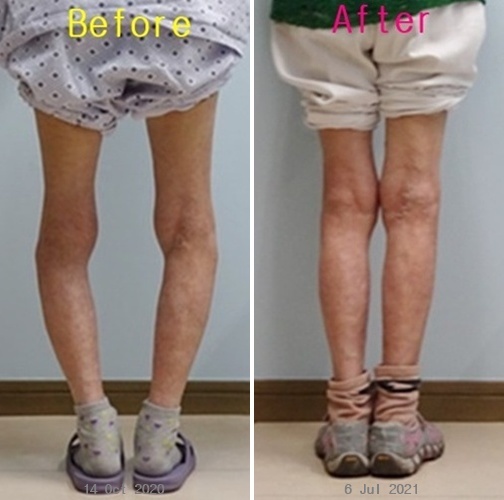
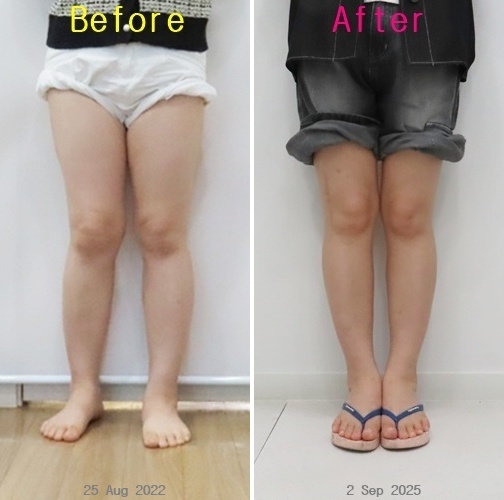
1. What Are Bow Legs?
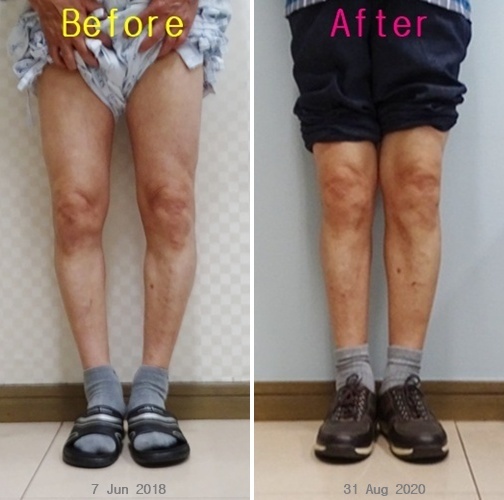
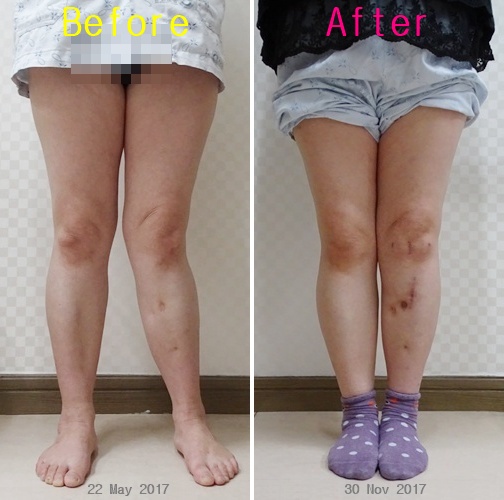
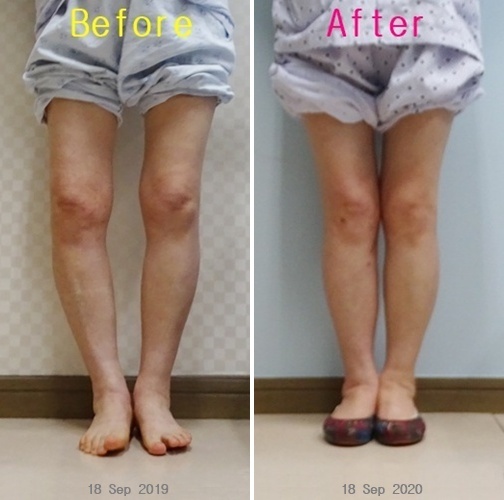
Bow legs, medically known as genu varum, describe a leg alignment in which the knees remain apart when the ankles or feet are brought together.
The legs may appear to curve outward in an O-shaped configuration.
Possible features include:
✔ O-shaped legs
✔ Knees remaining apart while standing
✔ Uneven weight distribution
✔ Knee discomfort
✔ Abnormal walking mechanics
✔ Visible leg asymmetry
The location and cause of the deformity should be identified before considering treatment.
2. What Are Knock Knees?
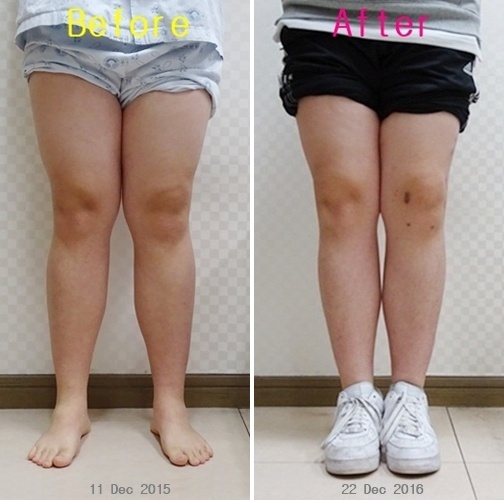
Knock knees, medically known as genu valgum, describe an alignment in which the knees move inward toward each other while the ankles remain apart.
The legs may appear X-shaped when standing.
Possible features include:
✔ X-shaped leg alignment
✔ Knees touching while the ankles remain apart
✔ Abnormal weight distribution
✔ Knee discomfort
✔ Gait abnormalities
✔ Functional or cosmetic concerns
The degree of visible deformity does not always identify where the underlying bone abnormality is located.
3. Causes of Bow Legs & Knock Knees
Possible causes include:
✔ Congenital bone deformity
✔ Developmental abnormalities
✔ Growth plate disorders
✔ Previous fractures
✔ Fracture malunion
✔ Metabolic bone disorders
✔ Previous surgery
✔ Degenerative joint disease
✔ Other structural abnormalities
In children and adolescents, some changes in leg alignment can occur naturally during growth.
Persistent or pronounced deformity should be appropriately evaluated.
4. Symptoms of Leg Alignment Deformity
Patients may experience:
✔ Bowed or knock-kneed appearance
✔ Knee pain
✔ Uneven loading of the knee
✔ Fatigue when standing or walking
✔ Abnormal gait
✔ Joint instability
✔ Limited activity
✔ Asymmetry between the legs
✔ Concerns about leg appearance
Some patients have significant deformity without substantial pain, while others seek treatment because of functional symptoms.
5. Why Full-Leg Alignment Matters
Bow legs and knock knees should not be evaluated from the knees alone.
The alignment of the entire lower extremity should be considered, including the:
✔ Hip
✔ Femur
✔ Knee
✔ Tibia
✔ Ankle
Standing full-length X-rays can help determine:
✔ Mechanical axis
✔ Location of the deformity
✔ Degree of angulation
✔ Joint orientation
✔ Differences between the two legs
This information is important when planning corrective surgery.
6. Non-Surgical Treatment
Treatment depends on age, cause, symptoms, and severity.
Conservative management may include:
✔ Observation
✔ Physical therapy
✔ Muscle strengthening
✔ Stretching
✔ Management of associated joint pain
✔ Weight management when appropriate
Exercise and physical therapy may improve symptoms and muscle function but generally cannot correct a fixed structural bone deformity in an adult.
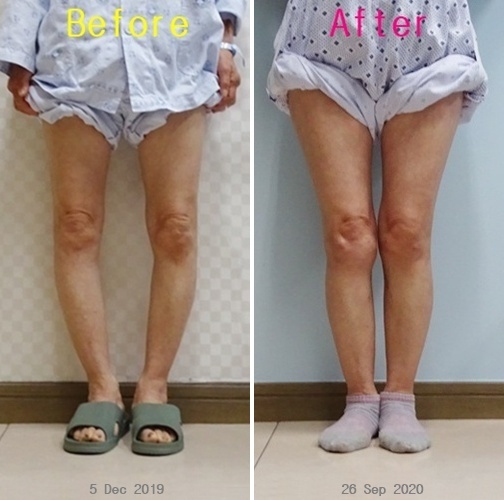
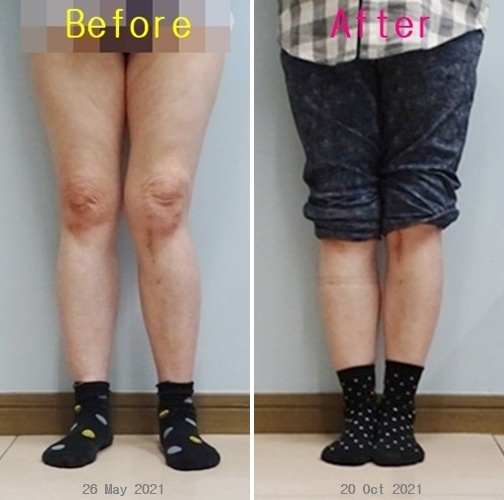
7. When Is Surgery Considered?
Surgical correction may be considered when there is:
✔ Significant bow-leg deformity
✔ Significant knock-knee deformity
✔ Progressive deformity
✔ Persistent joint pain
✔ Abnormal mechanical alignment
✔ Functional limitations
✔ Post-traumatic deformity
✔ Significant asymmetry
✔ Individual concerns about pronounced leg alignment
The indication for surgery should be determined after clinical and radiographic evaluation.
8. Bow Leg Correction Surgery
When genu varum is caused by a structural bone deformity, a corrective osteotomy may be considered.
The bone is corrected at the appropriate level to improve lower-limb alignment.
Depending on the location of the deformity, correction may involve the:
✔ Femur
✔ Tibia
✔ More than one level in selected cases
The objective is to restore more appropriate mechanical alignment while considering the patient's joint condition and overall limb proportions.
9. Knock Knee Correction Surgery
Surgical treatment of genu valgum also depends on where the deformity originates.
Correction may involve:
✔ Femoral osteotomy
✔ Tibial osteotomy
✔ Combined correction in selected cases
Preoperative full-leg imaging is important to determine the correct level and amount of correction.
10. 3D Leg Alignment Correction
A leg deformity may involve more than simple inward or outward angulation.
Some patients may also have:
✔ Rotational deformity
✔ Flexion or extension abnormalities
✔ Differences between the femur and tibia
✔ Asymmetry between both legs
Corrective surgery should therefore address the patient's actual three-dimensional deformity when necessary.
11. Post-Traumatic Leg Deformity
Fractures of the femur or tibia can occasionally heal with abnormal alignment.
Post-traumatic deformity may include:
✔ Varus
✔ Valgus
✔ Rotation
✔ Flexion or extension deformity
✔ Limb-length difference
✔ Joint malalignment
Corrective osteotomy may be considered depending on the location and severity of the deformity.
12. Revision Surgery for Bow Legs & Knock Knees
Patients with persistent or recurrent deformity after previous surgery may be evaluated for revision correction.
Reasons for revision may include:
✔ Residual bowing
✔ Residual knock-knee alignment
✔ Overcorrection
✔ Undercorrection
✔ Loss of correction
✔ Malunion
✔ Nonunion
✔ Implant problems
✔ Rotational deformity
✔ Persistent functional symptoms
Revision surgery is generally more complex and requires careful analysis of previous correction and current alignment.
Detailed Bow Legs & Knock Knees Surgery Information
Would you like to learn more about bow legs, knock knees, genu varum, genu valgum, corrective osteotomy, and leg alignment correction?
Visit our detailed surgical information page for additional information about lower-limb alignment, surgical correction, and recovery.
13. Can Leg Correction Change Height?
Corrective osteotomy primarily aims to improve alignment, not to increase height.
However, changing the alignment of a significantly bowed leg may produce a small change in measured standing height in some patients.
The amount varies according to the original deformity and correction.
Leg alignment surgery should therefore not be considered a substitute for limb-lengthening surgery when the primary goal is height increase.
14. Anesthesia
Depending on the procedure and patient's medical condition, selected lower-limb corrective procedures may be performed using regional anesthesia combined with sedation.
The appropriate anesthetic technique is determined individually according to the surgical procedure and medical assessment.
15. After Surgery & Rehabilitation
Recovery depends on the type and location of osteotomy, fixation method, and individual bone healing.
Postoperative care may include:
✔ Early joint range-of-motion exercises when appropriate
✔ Physical therapy
✔ Muscle strengthening
✔ Stretching
✔ Protection of the corrected bone
✔ Follow-up X-rays
✔ Gradual progression of weight bearing
A cast may not be required after selected procedures using stable internal fixation.
However, weight-bearing instructions vary considerably depending on the operation and should be followed carefully.
16. Possible Risks & Complications
As with any orthopedic procedure, complications are possible.
Potential risks include:
✔ Infection
✔ Delayed wound healing
✔ Delayed union
✔ Nonunion
✔ Fracture
✔ Implant irritation or failure
✔ Loss of correction
✔ Overcorrection
✔ Undercorrection
✔ Residual deformity
✔ Nerve & Vascular injury
✔ Need for additional surgery
Potential benefits, limitations, and risks should be discussed before surgery.
17. Frequently Asked Questions
Q. Can adult bow legs be corrected?
Yes, structural bow-leg deformity in adults can be evaluated for corrective osteotomy. The appropriate treatment depends on the location of the deformity, joint condition, symptoms, and overall alignment.
Q. Can adult knock knees be corrected?
Selected adult genu valgum deformities can be corrected surgically. Full-length standing X-rays are useful for determining where correction should be performed.
Q. Can exercise straighten adult bow legs?
Exercise may improve muscle strength, flexibility, and symptoms but generally cannot substantially straighten a fixed structural bone deformity.
Q. Is general anesthesia always required?
Not necessarily. Selected procedures may be performed under regional anesthesia with sedation depending on the operation and patient condition.
Q. Will I need a cast?
A cast may not be necessary after selected procedures with stable internal fixation. The need for protection depends on the operation and fixation.
Q. When can I start moving my knee?
Early range-of-motion exercises may be started after selected procedures according to the surgeon's instructions.
Q. Can I walk immediately after surgery?
Weight bearing depends on the osteotomy, fixation method, bone quality, and stability of correction. Some patients may begin protected weight bearing relatively early, while others require a period of restricted weight bearing.
Q. Will I become taller after bow-leg correction?
A small increase in measured standing height may occur after correction of significant bowing, but the amount varies and is not the primary purpose of surgery.
Q. Can failed or overcorrected bow-leg surgery be corrected?
Selected cases of residual deformity, overcorrection, undercorrection, or other problems following previous surgery can be evaluated for revision treatment.
18. Bow Legs & Knock Knees Surgery in Seoul, South Korea
Gangnam Champion Hospital provides evaluation and treatment for:
✔ Bow legs
✔ Genu varum
✔ Knock knees
✔ Genu valgum
✔ O-shaped legs
✔ X-shaped legs
✔ Post-traumatic leg deformity
✔ Femoral deformity
✔ Tibial deformity
✔ Corrective osteotomy
✔ Revision leg alignment surgery
Treatment is individually planned according to the patient's full-leg alignment, X-rays, symptoms, joint condition, and treatment goals.
International Patient Consultation
International patients interested in bow-leg or knock-knee correction in Korea may contact us before traveling.
For preliminary evaluation, it may be helpful to provide:
✔ Full-length standing photographs
✔ Front and side views
✔ Photographs with both knees and ankles visible
✔ Standing full-leg X-rays, if available
✔ Age
✔ Height and weight
✔ Previous fracture history
✔ Previous leg surgery history
✔ Current symptoms
Final diagnosis and surgical planning require appropriate medical examination and imaging.
Gangnam Champion Hospital
525 Ogeum-ro, Songpa-gu
Seoul, South Korea
T : +82-2-408-7575
E : drahn818@naver.com
◆: [ Consultation ]
Patients from overseas may contact the hospital for information regarding consultation, treatment scheduling, expected stay in Korea, and follow-up care.
This page provides general medical information and does not replace an individual medical consultation. Surgical indications, techniques, recovery, risks, and outcomes vary according to each patient's condition.
-축소 150.jpg)