통합 검색
통합 검색
LengtheningㅣCorrection
Gangnam Champion Orthopedic Surgery
Hospital
- Limb Lengthening & Correction
- Spine & Joint
- Hand & Foot
- Rehabilitation
Brachydactyly
Brachymetatarsia
Treatment in Korea
Short Finger & Short Toe
Correction Surgery
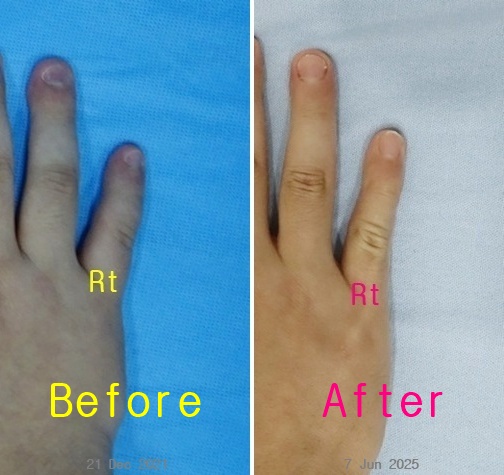
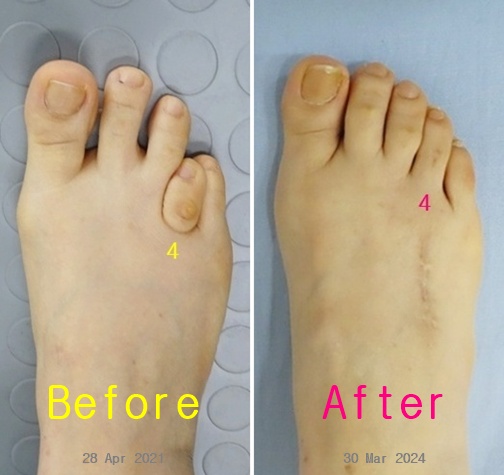
1. What Are Brachydactyly and Brachymetatarsia?
Brachydactyly is a condition in which one or more fingers or toes appear abnormally short because the bones of the fingers, toes, hands, or feet are shorter than usual.
Brachymetatarsia specifically refers to an abnormally short metatarsal bone in the foot. It commonly affects the fourth toe, causing the toe to appear shorter or elevated compared with the surrounding toes.
These conditions may occur on one side or both sides and can vary considerably in severity.
In some patients, the condition causes mainly cosmetic concerns, while others may experience difficulties with grip, footwear, walking, or weight distribution.
2. Common Features of Short Fingers and Short Toes
Common features may include:
✔ One or more fingers or toes appearing noticeably shorter
✔ A short toe appearing elevated or positioned differently from adjacent toes
✔ An uneven natural curve of the fingers or toes
✔ A missing or less prominent knuckle when making a fist
✔ Reduced grip strength in some cases
✔ Foot discomfort or pain caused by abnormal weight distribution
✔ Difficulty wearing certain types of shoes
✔ Cosmetic concerns when wearing sandals or open-toe shoes
✔ Self-consciousness about the appearance of the hands or feet
The severity and functional impact vary from person to person.
3. Causes of Brachydactyly and Brachymetatarsia
Most cases are congenital and develop because the affected bone does not grow to its expected length.
Possible causes include:
✔ Congenital or genetic factors
✔ Premature closure of the growth plate
✔ Idiopathic developmental abnormalities
✔ Previous trauma affecting the growth plate
✔ Infection or other acquired damage to the growth plate
✔ Rare genetic or systemic disorders
A physical examination and X-rays can help determine which bone is shortened and whether the joints and surrounding structures are affected.
4. Symptoms
Appearance
Patients may notice:
✔ A short finger or toe
✔ An elevated short toe
✔ Uneven finger or toe length
✔ An absent or less prominent knuckle when making a fist
✔ Changes in the natural contour of the hand or foot
Functional Problems
Depending on the severity, patients may experience:
✔ Difficulty wearing shoes comfortably
✔ Pain caused by abnormal pressure distribution
✔ Reduced grip strength
✔ Weakness of the affected finger
✔ Walking discomfort
✔ Callus formation or pressure on adjacent toes
Psychological and Cosmetic Concerns
Some patients may also experience:
✔ Self-consciousness about their hands or feet
✔ Avoidance of sandals or open-toe shoes
✔ Reduced confidence in social situations
✔ Concerns about the appearance of the affected finger or toe
Treatment decisions should consider both functional symptoms and the patient's individual concerns.
Do You Have a Short, Wide or Clubbed Thumb?
A short and wide thumb with a broad thumbnail may be Brachydactyly Type D, which is different from typical short-finger brachydactyly and may require a different surgical approach.
Learn More About Brachydactyly Type D & Clubbed Thumb Surgery
→ [ Brachydactyly Type D ]
Does One of Your Toes Look Too Long?
In some patients with brachymetatarsia, a normal-length adjacent toe may appear unusually long because the affected toe or metatarsal is shorter.
In other cases, the toe itself may actually be longer than the surrounding toes.
It is therefore important to determine whether the difference in toe length is caused by a short toe, a long toe, or a combination of both.
Learn More About Long Toe & Toe Shortening Surgery
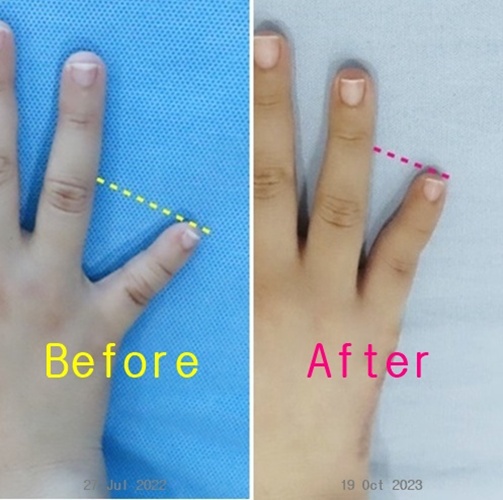
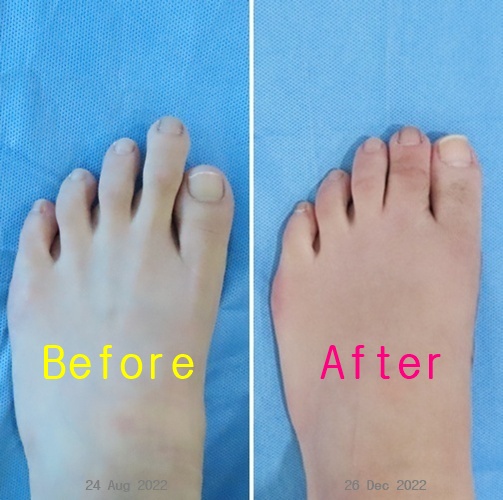
5. Brachydactyly & Brachymetatarsia Surgery Options
When correction of the shortened bone is desired, surgical lengthening may be considered.
The appropriate technique depends on the amount of shortening, bone condition, joint alignment, soft-tissue flexibility, age, and individual treatment goals.
Option 1. One-Stage Lengthening with Bone Grafting
The shortened bone is surgically divided and lengthened to the planned position during a single operation. A bone graft and internal fixation are then used to maintain the correction.
Advantages
✔ Immediate correction of a selected amount of shortening
✔ No external fixation device
✔ Internal fixation can make daily care more convenient
Considerations
Because the bone is lengthened immediately, excessive acute lengthening may place tension on the nerves, blood vessels, tendons, skin, and joints.
For this reason, the amount of lengthening that can safely be achieved in one stage may be limited.
Bone grafting may also be required. If an autologous bone graft is harvested from the pelvis, an additional incision and temporary donor-site discomfort may occur.
Option 2. Gradual Lengthening with an External Fixator
The shortened bone is surgically divided and an external fixation device is applied.
After surgery, the bone is gradually lengthened over time through a process known as distraction osteogenesis.
New bone gradually forms in the gap as the bone is lengthened.
Advantages
✔ Allows gradual bone lengthening
✔ Useful when a greater amount of lengthening is required
✔ Soft tissues can gradually adapt as the bone lengthens
✔ Pelvic bone grafting may not be necessary in selected cases
Considerations
✔ The external fixation device must remain in place during the lengthening and bone-healing period
✔ Treatment may continue for several months
✔ Daily pin-site care is required
✔ The device may cause inconvenience during daily activities
The exact treatment period varies depending on the amount of lengthening and the rate of bone formation.
Option 3. Gradual Lengthening with Early External Fixator Removal
In selected patients, gradual lengthening can be performed using an external fixator, followed by internal fixation after the desired length has been achieved.
This approach is designed to combine the advantages of gradual lengthening with a shorter external fixation period.
Advantages
✔ Allows gradual lengthening without relying solely on acute one-stage correction
✔ May avoid pelvic bone grafting in selected patients
✔ Can reduce the period during which the external fixation device is worn
✔ May be considered when a greater amount of correction is required
Considerations
✔ Usually requires more than one surgical procedure
✔ Additional internal fixation may be necessary
✔ Suitability depends on bone quality, desired lengthening, and individual anatomy
The appropriate technique should be determined after examination and X-ray evaluation.
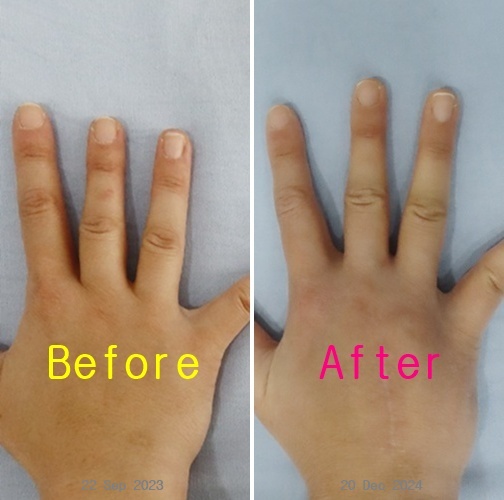
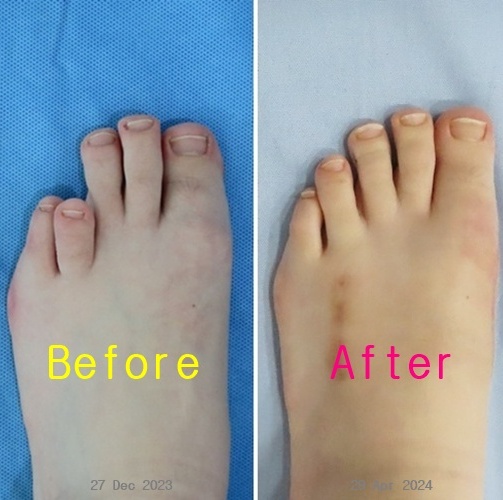
Learn more about our surgical techniques, treatment process, recovery, and postoperative care for short fingers and toes.
6. Before Surgery and Recovery
Preoperative Evaluation
Before surgery, the surgeon evaluates:
✔ Finger or toe length
✔ X-rays of the affected hand or foot
✔ Length and shape of the shortened bone
✔ Joint condition and alignment
✔ Condition of the surrounding soft tissues
✔ Desired amount of correction
✔ Functional and cosmetic concerns
Based on these findings, an individualized surgical plan can be developed.
Anesthesia
Depending on the procedure and individual condition, surgery may be performed using regional/local anesthesia with sedation.
The appropriate anesthesia method is determined after medical evaluation.
Recovery
Recovery varies depending on the surgical technique.
Patients undergoing gradual lengthening require regular follow-up to evaluate:
✔ New bone formation
✔ Bone alignment
✔ Joint movement
✔ Pin sites
✔ Nerve and soft-tissue condition
Activity levels and weight-bearing recommendations differ according to the procedure and healing progress.
7. Possible Risks and Complications
As with any orthopedic surgery, complications are possible.
Potential complications may include:
✔ Infection
✔ Pin-site infection
✔ Delayed bone healing
✔ Nonunion
✔ Fracture
✔ Joint stiffness
✔ Loss of alignment
✔ Finger or toe deformity
✔ Nerve or blood vessel irritation
✔ Tendon tightness
✔ Hardware irritation or breakage
✔ Need for additional surgery
The risks vary according to the surgical technique, amount of lengthening, bone condition, and individual patient factors.
A detailed consultation with the surgeon is important before deciding on treatment.
8. Expected Benefits of Brachydactyly Surgery
Depending on the patient's condition and treatment goals, surgical correction may help:
✔ Improve finger or toe length and proportion
✔ Restore a more balanced contour of the hand or foot
✔ Improve shoe comfort
✔ Reduce discomfort related to abnormal pressure distribution
✔ Improve grip or hand function in selected cases
✔ Address cosmetic concerns associated with short fingers or toes
Results and recovery vary between individuals, and no specific outcome can be guaranteed.
9. Frequently Asked Questions
Q. Is surgery always necessary for brachydactyly or brachymetatarsia?
No. If the condition does not cause significant functional or cosmetic concerns, observation or conservative management may be appropriate.
Surgery may be considered when the shortened finger or toe causes functional problems, pain, difficulty wearing shoes, or significant cosmetic concerns.
Q. Will there be a scar after surgery?
Any surgical incision can leave a scar. The location and size of the incision depend on the surgical technique. When appropriate, surgical planning aims to minimize the incision while allowing safe correction. Scar appearance varies between individuals.
Q. How much can a short finger or toe be lengthened?
There is no single safe length that applies to every patient.
The possible amount of lengthening depends on:
✔ Original bone length
✔ Joint condition
✔ Soft-tissue flexibility
✔ Nerve and blood vessel condition
✔ Age
✔ Surgical technique
✔ Desired correction
X-ray evaluation is necessary before determining the appropriate amount of lengthening.
Q. Can I use my hand or foot immediately after surgery?
This depends on the surgical technique. Patients treated with external fixation may be able to begin selected hand or foot activities relatively early according to the surgeon's instructions. Patients undergoing one-stage lengthening with bone grafting and internal fixation may require a period of protection or immobilization while the bone heals. Your surgeon will provide specific instructions regarding hand use, walking, weight bearing, and rehabilitation.
Q. How long does brachymetatarsia lengthening take?
Treatment duration varies according to the amount of lengthening and bone-healing rate. Gradual lengthening involves a lengthening phase followed by a consolidation phase during which the newly formed bone becomes stronger. The entire treatment period may therefore take several months.
10. Brachydactyly & Brachymetatarsia Treatment in Seoul, South Korea
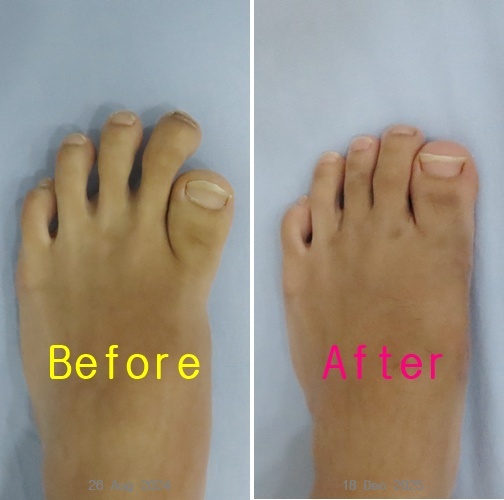
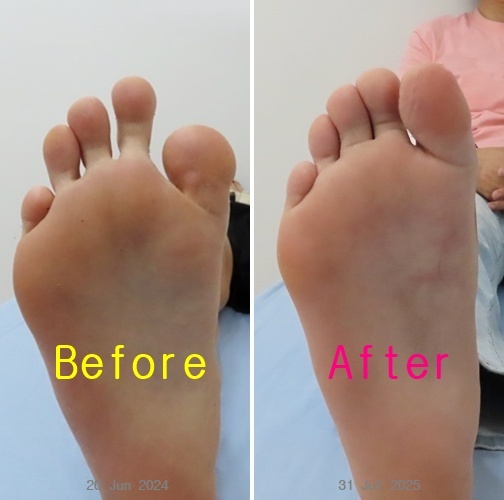
Gangnam Champion Hospital provides evaluation and surgical treatment for patients with short fingers and short toes, including brachydactyly and brachymetatarsia.
Treatment is individually planned according to:
✔ The affected bone
✔ Degree of shortening
✔ Desired lengthening
✔ Joint condition
✔ Soft-tissue condition
✔ Functional symptoms
✔ Cosmetic concerns
International patients may receive an initial consultation before traveling to Korea.
Providing clear photographs and recent X-rays can help the medical team better understand the condition before an in-person examination.
Final diagnosis and treatment planning are determined after appropriate medical evaluation.
International Patient Consultation
For inquiries regarding brachydactyly surgery, brachymetatarsia surgery, short finger correction, or short toe lengthening in Korea, please contact us.
Gangnam Champion Hospital
525 Ogeum-ro, Songpa-gu
Seoul, South Korea
T : +82-2-408-7575
E : drahn818@naver.com
◆: [ Consultation ]
Patients from overseas may contact the hospital for information regarding consultation, treatment scheduling, expected stay in Korea, and follow-up care.
This page provides general medical information and is not a substitute for individual medical diagnosis or treatment. Surgical indications, methods, recovery periods, and outcomes vary depending on each patient's condition.
-축소 150.jpg)