통합 검색
통합 검색
LengtheningㅣCorrection
Gangnam Champion Orthopedic Surgery
Hospital
- Limb Lengthening & Correction
- Spine & Joint
- Hand & Foot
- Rehabilitation
Hallux Valgus
Bunion Surgery
in Korea
Minimally Invasive &
Individualized Bunion
Correction
Hallux valgus, commonly known as a bunion, can vary significantly from one patient to another. The degree of deformity, bone alignment, joint condition, foot width, and associated toe deformities all need to be considered when selecting a surgical technique.
There are many different surgical procedures for hallux valgus. Rather than using the same operation for every patient, the surgical method should be selected according to the individual's foot anatomy and deformity.
At Gangnam Champion Hospital, treatment is individually planned based on the patient's foot structure and condition. Depending on the deformity, surgical options may include minimally invasive techniques, MICA/MITA procedures, osteotomy, and other corrective procedures.
The goals of treatment are to correct the underlying bone alignment, improve the position of the great toe, reduce pain and functional problems, and minimize surgical scarring when medically appropriate.
Treatment is also available for recurrent hallux valgus and patients requiring revision bunion surgery.
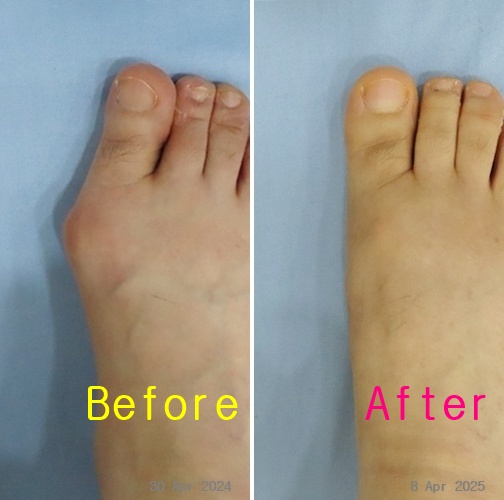
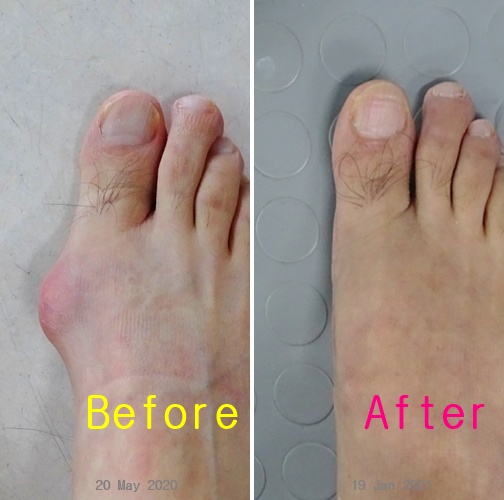
1. What Is Hallux Valgus?
Hallux valgus is a foot deformity in which the great toe gradually deviates toward the second toe while the joint on the inner side of the foot becomes prominent.
This prominent area is commonly called a bunion.
As the alignment of the bones in the forefoot changes, patients may develop:
✔ A prominent bump on the inner side of the foot
✔ Deviation of the great toe
✔ Pain around the great toe joint
✔ Difficulty wearing shoes
✔ Pressure on the other toes
✔ Changes in weight distribution during walking
In the early stages, hallux valgus may appear primarily as a change in foot shape.
As the deformity progresses, however, pain, calluses, shoe irritation, secondary toe deformities, and walking difficulties may develop.
2. What Is a Tailor's Bunion?
A Tailor's Bunion, also known as a bunionette, develops on the opposite side of the foot near the little toe.
Instead of the great toe being affected, the fifth metatarsal and little toe become misaligned, creating a painful prominence on the outer side of the foot.
Common symptoms include:
✔ Prominence near the little toe
✔ Pain when wearing shoes
✔ Redness or swelling
✔ Callus formation
✔ Widening of the forefoot
Some patients have both hallux valgus and a Tailor's Bunion.
When appropriate, both deformities can be evaluated and corrected as part of the same treatment plan.
3. Symptoms of Hallux Valgus
Common symptoms include:
Visible Changes
✔ A prominent bump at the base of the great toe
✔ Great toe deviation toward the second toe
✔ Increasing forefoot width
✔ Overlapping or crowding of the toes
✔ Changes in overall foot shape
Pain & Functional Problems
Patients may experience:
✔ Pain on the inner side of the foot
✔ Pain while wearing shoes
✔ Swelling or inflammation around the joint
✔ Pain during prolonged standing or walking
✔ Calluses on the sole of the foot
✔ Pressure beneath the second or third metatarsal
✔ Difficulty finding comfortable shoes
As hallux valgus progresses, the great toe may push against the second toe and contribute to additional deformities.
4. When Should You See an Orthopedic Specialist?
Evaluation may be appropriate when:
✔ The great toe is becoming progressively more deviated
✔ The bunion is becoming increasingly prominent
✔ Pain persists while walking
✔ Shoes are becoming difficult to wear
✔ The second toe is beginning to deform
✔ Calluses repeatedly develop beneath the forefoot
✔ Conservative treatment no longer controls symptoms
An X-ray taken while standing can help evaluate the degree of deformity and alignment of the bones.
5. Causes of Hallux Valgus
Hallux valgus usually develops through a combination of anatomical and environmental factors.
Possible contributing factors include:
✔ Inherited foot structure
✔ Family history of bunions
✔ Foot anatomy and biomechanics
✔ Flat feet
✔ Muscle and tendon imbalance
✔ Tight or narrow footwear
✔ High-heeled shoes
✔ Rheumatoid arthritis and certain joint disorders
Shoes alone are not necessarily the sole cause of hallux valgus, but certain footwear may aggravate symptoms or contribute to progression in susceptible individuals.
6. Diagnosis
A diagnosis is based on physical examination and imaging.
The evaluation may include:
✔ Degree of great toe deviation
✔ Location of pain
✔ Joint movement
✔ Forefoot width
✔ Associated lesser-toe deformities
✔ Calluses and pressure points
✔ Foot alignment
✔ Weight-bearing X-rays
X-rays are particularly important when planning surgery because patients who appear to have similar bunions externally may have different underlying bone alignment.
This is one reason why the same operation is not necessarily appropriate for every patient.
7. Non-Surgical Treatment
For mild symptoms, conservative treatment may help reduce discomfort.
Options may include:
✔ Wider and more comfortable footwear
✔ Shoe modification
✔ Orthotic insoles
✔ Toe spacers or corrective devices
✔ Stretching exercises
✔ Physical therapy
✔ Activity modification
✔ Appropriate pain management
These treatments may help relieve symptoms but generally do not permanently correct the underlying structural bone deformity.
If pain and functional problems persist despite conservative treatment, surgery may be considered.
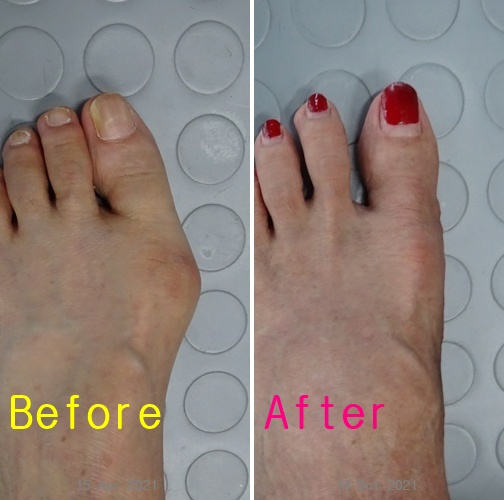
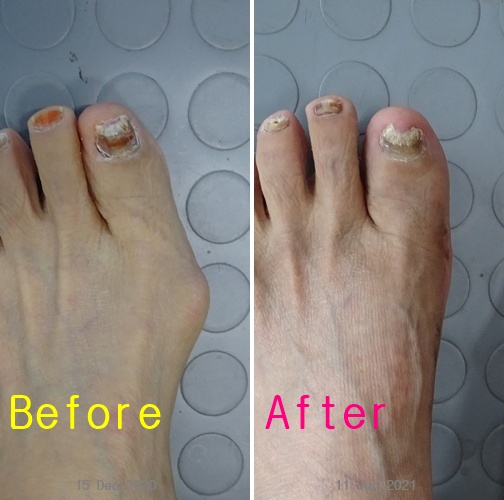
8. When Is Bunion Surgery Considered?
Surgical correction may be considered when:
✔ Pain persists despite conservative treatment
✔ Walking becomes uncomfortable
✔ Shoe wear is significantly restricted
✔ The deformity continues to progress
✔ The great toe significantly affects the adjacent toes
✔ Secondary toe deformities develop
✔ Daily activities are affected
The decision to undergo surgery should be based on symptoms, examination, X-rays, functional limitations, and the patient's individual goals rather than appearance alone.
9. Individualized Hallux Valgus Surgery
There is no single bunion operation that is appropriate for every foot.
Different patients may have different degrees and locations of deformity.
For example, surgical planning may need to consider:
✔ Great toe alignment
✔ First metatarsal alignment
✔ Severity of the deformity
✔ Joint congruity
✔ Rotation of the great toe
✔ Forefoot width
✔ Bone quality
✔ Flat-foot deformity
✔ Associated Tailor's Bunion
✔ Hammer toes or other lesser-toe deformities
✔ Previous bunion surgery
At Gangnam Champion Hospital, the surgical technique is selected according to the individual's anatomy and X-ray findings.
The objective is not simply to remove the visible bunion bump but to address the underlying structural deformity.
10. Minimally Invasive Bunion Surgery
Smaller Incisions When Appropriate
Minimally invasive bunion surgery (MIS) uses smaller incisions to perform selected bone and soft-tissue correction.
Depending on the patient's deformity, minimally invasive techniques may be considered to reduce soft-tissue disruption and surgical scarring.
However, minimally invasive surgery is not automatically the best procedure for every patient.
The priority should be achieving appropriate correction of the deformity while maintaining stability and joint function.
The choice between minimally invasive and conventional techniques should therefore be individualized.
11. MICA / Minimally Invasive Osteotomy
MICA (Minimally Invasive Chevron and Akin) is one minimally invasive technique used for selected hallux valgus deformities.
Through small incisions, osteotomies are performed to reposition the bones and improve alignment.
Internal fixation is then used to maintain the corrected position while the bone heals.
Depending on the patient's anatomy, other minimally invasive or osteotomy techniques may also be considered.
The appropriate procedure is selected after examination and weight-bearing X-rays.
12. Osteotomy for Hallux Valgus
An osteotomy involves carefully cutting and repositioning the bone to correct abnormal alignment.
Different osteotomy techniques can correct deformity at different anatomical locations.
Depending on the patient's condition, correction may involve:
✔ Metatarsal osteotomy
✔ Akin osteotomy
✔ Distal or proximal correction
✔ Soft-tissue balancing
✔ Additional lesser-toe procedures
✔ Tailor's Bunion correction
The exact combination depends on the individual foot.
Detailed Hallux Valgus & Bunion Surgery Information
Would you like to learn more about hallux valgus surgery, bunion correction, surgical techniques, recovery, and postoperative care?
Visit our detailed surgical information page for additional information about the treatment process and surgical options.
13. Hallux Valgus & Tailor's Bunion Surgery
When a patient has both a bunion on the great-toe side and a Tailor's Bunion on the little-toe side, both deformities may contribute to a wide and painful forefoot.
In selected patients, both conditions may be corrected during the same surgical treatment.
The surgical plan depends on:
✔ Degree of hallux valgus
✔ Fifth metatarsal alignment
✔ Forefoot width
✔ Location of pain
✔ Bone structure
✔ Overall foot alignment
Do You Have an Excessively Long Toe?
Some patients with hallux valgus also have an excessively long second, third, or other toe, which can affect the overall balance and contour of the forefoot.
A long toe may cause shoe irritation, pressure at the tip of the toe, calluses, discomfort, or difficulty finding comfortable footwear.
When appropriate, the length of the toe can be corrected through toe shortening surgery, with the amount of shortening individually planned according to the proportions of the surrounding toes and overall foot shape.
Learn More About Long Toe & Toe Shortening Surgery
→ [ Long Toe Shortening ]
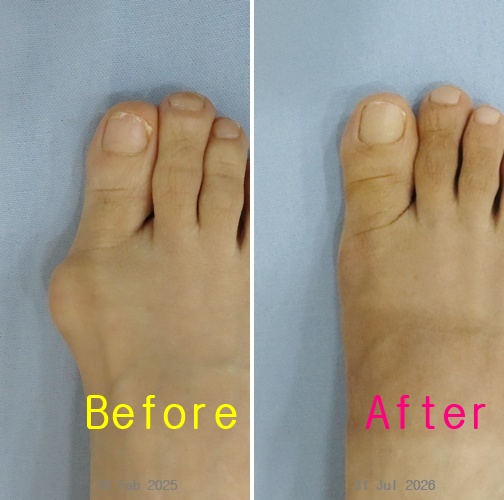
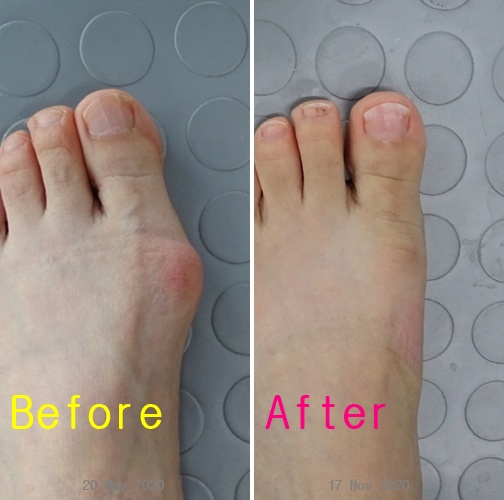
14. Revision Bunion Surgery
Treatment for Recurrent Hallux Valgus
Some patients experience persistent or recurrent deformity after previous bunion surgery.
Possible problems after previous surgery may include:
✔ Recurrent hallux valgus
✔ Persistent pain
✔ Residual bone deformity
✔ Overcorrection
✔ Under-correction
✔ Malalignment
✔ Hardware-related problems
✔ Nonunion or delayed bone healing
✔ Secondary toe deformities
Revision bunion surgery is generally more complex than primary surgery because the anatomy may have been altered by the previous operation.
Evaluation may therefore require careful examination of:
✔ Previous surgical technique
✔ Current bone alignment
✔ Bone quality
✔ Joint condition
✔ Existing implants
✔ Previous osteotomy sites
✔ Soft-tissue condition
After evaluation, an individualized revision plan can be developed.
15. Anesthesia
Depending on the patient's medical condition and surgical plan, hallux valgus surgery may be performed using regional anesthesia combined with sedation.
This can allow surgery to be performed without general anesthesia in selected patients.
The appropriate anesthesia method is determined after medical evaluation.
16. Bunion Surgery Process
Before Surgery
Evaluation may include:
✔ Physical examination
✔ Weight-bearing X-rays
✔ Measurement of the deformity
✔ Assessment of joint movement
✔ Evaluation of associated toe deformities
✔ Review of previous surgery, if applicable
✔ Selection of an individualized surgical technique
✔ During Surgery
Depending on the patient's condition:
✔ The abnormal bone alignment is corrected
✔ Osteotomy may be performed
✔ The great toe is repositioned
✔ Joint and soft-tissue balance may be restored
✔ Internal fixation may be used to maintain correction
The exact procedure varies from patient to patient.
17. Walking After Bunion Surgery
One of the most common questions is:
"Can I walk after bunion surgery?"
In selected patients, protected walking may begin relatively early after surgery using a postoperative surgical shoe.
A cast may not be necessary for certain procedures.
However, the timing and amount of weight bearing depend on:
✔ Surgical technique
✔ Bone quality
✔ Stability of fixation
✔ Additional procedures
✔ Healing progress
Patients should therefore follow their surgeon's individual weight-bearing instructions.
18. Pain Management After Surgery
Postoperative pain varies between patients.
Pain management may include:
✔ Regional nerve block
✔ Patient-controlled or other prescribed analgesia
✔ Oral pain medication
✔ Intravenous medication when appropriate
✔ Cold therapy
✔ Elevation of the foot
Swelling is expected after foot surgery and may persist for some time.
Keeping the foot elevated and following postoperative instructions can help manage swelling.
19. Post-Operative Care
Depending on the surgical procedure, postoperative instructions may include:
✔ Wearing a postoperative surgical shoe
✔ Protected walking according to instructions
✔ Keeping the wound dry during initial healing
✔ Cold therapy for swelling
✔ Elevating the foot
✔ Compression when medically appropriate
✔ Regular wound checks
✔ Follow-up X-rays
✔ Gradual rehabilitation
The wound is generally protected from water during the initial healing period.
Specific instructions vary according to the procedure and individual healing.
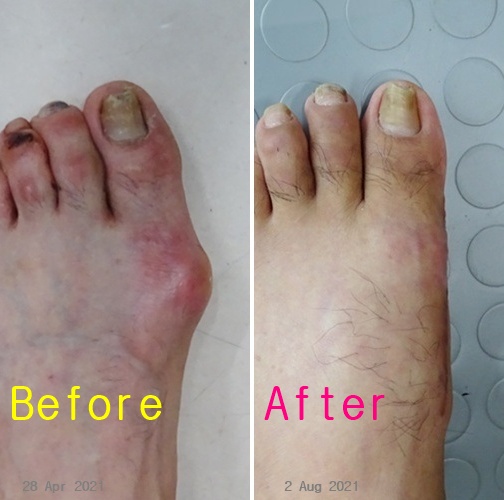
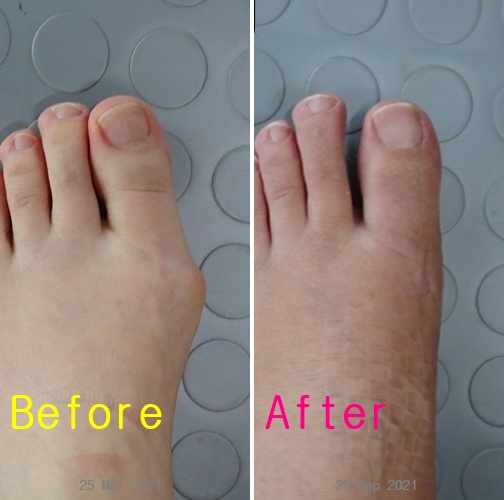
20. Possible Risks and Complications
As with any orthopedic surgery, complications are possible.
Potential risks include:
✔ Infection
✔ Delayed wound healing
✔ Delayed union
✔ Nonunion
✔ Fracture
✔ Hardware irritation or failure
The risks vary according to the severity of deformity, surgical technique, medical condition, and individual healing response.
A detailed consultation is important before deciding on surgery.
21. Frequently Asked Questions
Q. Is the same bunion surgery used for everyone?
No. Hallux valgus varies in severity and underlying bone alignment. The surgical technique should be selected according to the patient's foot anatomy, symptoms, X-rays, and treatment goals.
Q. Is minimally invasive bunion surgery always better?
Not necessarily. A smaller incision can be advantageous in appropriately selected patients, but the primary goal is accurate and stable correction of the deformity.
The most appropriate procedure depends on the individual foot.
Q. Will I need a cast after bunion surgery?
A cast may not be necessary after certain hallux valgus procedures. A postoperative surgical shoe may be used instead. The need for immobilization depends on the surgical technique and stability of the correction.
Q. Can I walk immediately after surgery?
Protected walking may be possible relatively early after certain procedures using a postoperative surgical shoe. However, weight-bearing instructions vary according to the operation and individual condition.
Q. Is bunion surgery painful?
Some postoperative pain and swelling are expected. Regional nerve blocks, analgesic medication, cold therapy, elevation, and other pain-management techniques may be used to improve comfort after surgery.
Q. Can hallux valgus come back after surgery?
Recurrence is possible after any hallux valgus surgery. The risk is influenced by several factors, including the original deformity, surgical technique, bone alignment, associated foot conditions, and individual healing.
Selecting a procedure that appropriately addresses the patient's underlying deformity is therefore important.
Q. Can recurrent hallux valgus be treated?
Yes, revision surgery may be considered in selected patients with recurrent deformity, persistent pain, malalignment, or other problems following previous bunion surgery. Revision treatment requires careful assessment of the previous operation and current foot structure.
Q. Can a Tailor's Bunion be corrected at the same time?
In selected patients, hallux valgus and a Tailor's Bunion may be corrected during the same treatment. The decision depends on the severity and anatomy of both deformities.
22. Hallux Valgus & Bunion Surgery in Seoul, South Korea
Gangnam Champion Hospital provides evaluation and surgical treatment for:
✔ Hallux valgus
✔ Bunions
✔ Tailor's Bunions / Bunionettes
✔ Recurrent hallux valgus
✔ Revision bunion surgery
✔ Associated toe deformities
Surgical treatment is individually planned according to the patient's anatomy, X-rays, symptoms, and previous treatment.
International patients may receive an initial assessment before traveling to Korea.
Clear photographs and recent weight-bearing foot X-rays can be helpful for preliminary evaluation.
Final diagnosis and surgical planning are determined after appropriate medical examination.
International Patient Consultation
International patients interested in bunion surgery, minimally invasive hallux valgus surgery, Tailor's Bunion surgery, or revision bunion surgery in Korea may contact us before arranging travel.
For preliminary review, it may be helpful to provide:
✔ Clear photographs of both feet
✔ Front and side views
✔ Recent weight-bearing X-rays, if available
✔ Age
✔ Previous foot surgery history
✔ Current symptoms
✔ Preferred travel dates
Information regarding consultation, surgical scheduling, expected stay in Korea, and postoperative follow-up can then be discussed.
Gangnam Champion Hospital
525 Ogeum-ro, Songpa-gu
Seoul, South Korea
T : +82-2-408-7575
E : drahn818@naver.com
◆: [ Consultation ]
Patients from overseas may contact the hospital for information regarding consultation, treatment scheduling, expected stay in Korea, and follow-up care.
This page provides general medical information and does not replace an individual medical consultation. Surgical indications, techniques, recovery periods, risks, and outcomes vary according to each patient's condition.
-축소 150.jpg)