통합 검색
통합 검색
LengtheningㅣCorrection
Gangnam Champion Orthopedic Surgery
Hospital
- Limb Lengthening & Correction
- Spine & Joint
- Hand & Foot
- Rehabilitation
Clinodactyly
Camptodactyly Surgery
in Korea
Crooked, Curved &
Bent Finger Correction
A finger that curves sideways, bends forward, or cannot fully straighten may be caused by clinodactyly, camptodactyly, a congenital deformity, or a deformity following trauma.
These conditions commonly affect the little finger (pinky finger), although other fingers and toes can also be involved.
At Gangnam Champion Hospital in Seoul, South Korea, treatment is individually planned according to the type of deformity, bone structure, joint alignment, tendon balance, symptoms, and functional limitations.
Surgical correction may be considered for congenital deformities as well as long-standing finger deformities that have been present for many years.
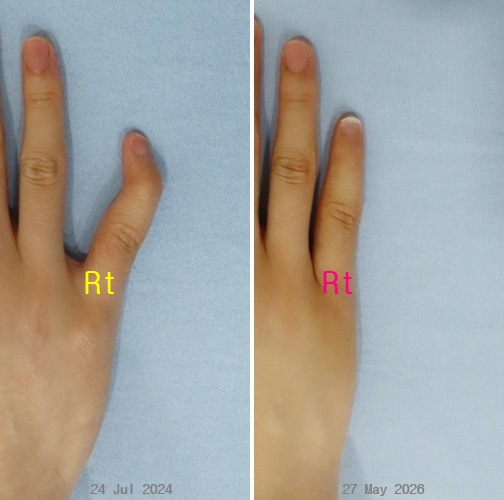
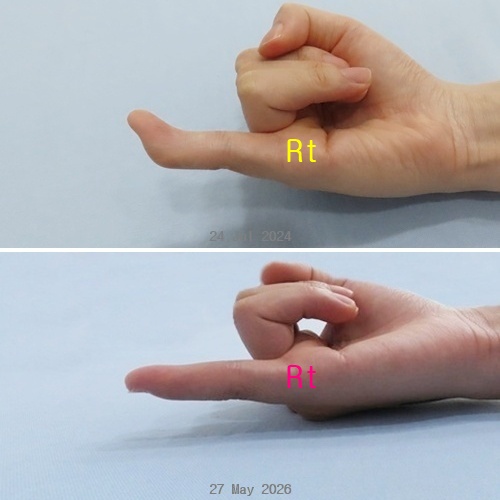
1. What Causes a Crooked or Bent Finger?
A crooked finger can have several different appearances.
Some fingers curve sideways, while others remain bent forward and cannot fully straighten.
Possible conditions include:
✔ Clinodactyly – sideways curvature of a finger
✔ Camptodactyly – flexion deformity in which a finger remains bent
✔ Congenital bone deformity
✔ Growth plate abnormalities
✔ Tendon or ligament imbalance
✔ Post-traumatic deformity
✔ Malunion following a fracture
✔ Deformity following previous surgery or injury
Because treatment differs depending on the underlying cause, an accurate diagnosis is important before considering correction.
2. What Is Clinodactyly?
Clinodactyly is a deformity in which a finger curves sideways toward an adjacent finger.
It most commonly affects the little finger or pinky finger.
Common features include:
✔ Sideways curvature of the finger
✔ Curved pinky finger
✔ Crooked little finger
✔ Visible asymmetry between the hands
✔ Overlap or interference with an adjacent finger in more pronounced cases
Clinodactyly is often congenital and may become more noticeable as the hand grows.
Mild clinodactyly may not require treatment.
When the curvature is more pronounced or causes functional or significant individual concerns, surgical correction may be considered after appropriate evaluation.
3. What Is Camptodactyly?
Camptodactyly is a flexion deformity in which a finger remains bent and cannot fully straighten.
It commonly affects the little finger and may involve one or both hands.
Typical features include:
✔ Finger remains bent
✔ Difficulty fully straightening the finger
✔ Progressive flexion deformity during growth
✔ Tightness of surrounding soft tissues
✔ Functional limitations in more severe cases
Camptodactyly is different from clinodactyly.
Clinodactyly primarily describes sideways curvature, whereas camptodactyly primarily describes a flexed or bent finger.
Determining the exact type of deformity is important because the treatment approach may be different.
4. Curved Pinky Finger
A curved or bent little finger is one of the most common reasons patients seek evaluation for finger deformity.
Patients may describe the condition as:
✔ Curved pinky finger
✔ Bent pinky finger
✔ Crooked pinky
✔ Crooked little finger
✔ Pinky finger bending inward
✔ Pinky finger that cannot straighten
The underlying condition may be clinodactyly, camptodactyly, or another bone, joint, or soft-tissue deformity.
X-rays and physical examination can help identify the cause.
5. Causes of Finger Deformity
Finger deformities may result from:
Congenital Causes
Abnormal bone shape or growth can cause a finger to gradually curve as the hand develops.
Growth Plate Abnormalities
Asymmetric growth of a phalanx can produce progressive angular deformity.
Tendon & Soft-Tissue Imbalance
Abnormal tension in tendons, ligaments, or other soft tissues may contribute to a bent finger.
Trauma
Fractures, crush injuries, lacerations, or other accidents may lead to persistent deformity.
Fracture Malunion
If a fractured finger heals in an abnormal position, the finger may remain rotated, bent, or angled.
Previous Surgery or Injury
Residual or recurrent deformity may occasionally occur following previous treatment.
6. Long-Standing Finger Deformity
Some patients have lived with a crooked or bent finger for several decades.
A deformity that has been present for many years does not automatically mean that correction is impossible.
However, long-standing deformities may involve changes in:
✔ Bone shape
✔ Joint structure
✔ Tendons
✔ Ligaments
✔ Skin and soft tissue
✔ Range of motion
Therefore, treatment must be individually evaluated.
The patient's age, joint condition, flexibility of the deformity, bone quality, and expected functional benefit should all be considered before surgery.
7. Diagnosis
Evaluation may include:
✔ Physical examination
✔ Measurement of finger curvature
✔ Range-of-motion testing
✔ Assessment of joint stability
✔ Evaluation of tendon function
✔ X-rays
✔ Ultrasound when appropriate
✔ Review of previous injuries or surgery
The objective is to determine why the finger is bent or curved, rather than treating appearance alone.
8. Non-Surgical Treatment
Not every crooked or bent finger requires surgery.
Depending on the condition, conservative treatment may include:
✔ Stretching
✔ Splinting
✔ Hand therapy
✔ Range-of-motion exercises
✔ Observation during growth
Non-surgical treatment may be particularly appropriate for mild or flexible deformities.
However, a fixed structural bone deformity may not be fully corrected by stretching or splinting alone.
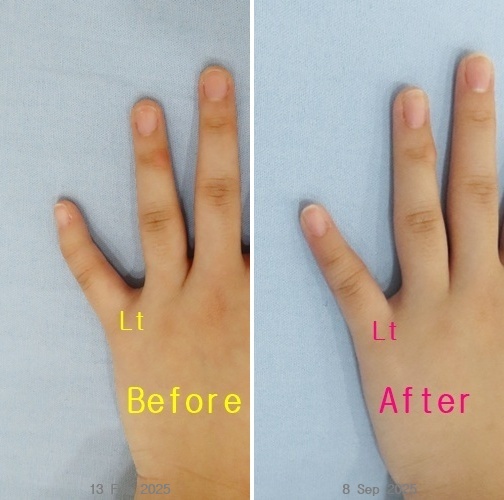
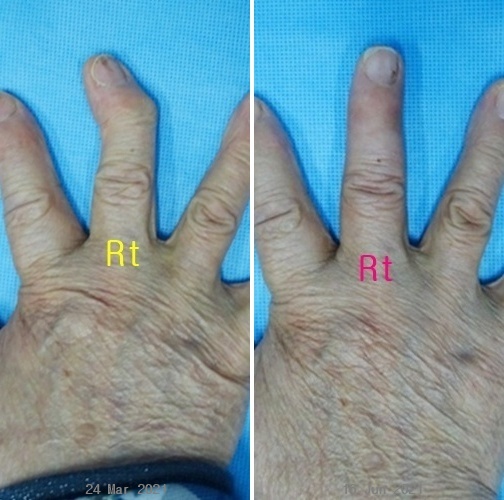
9. Clinodactyly Surgery
When clinically appropriate, surgical correction of clinodactyly may involve correction of the abnormal bone alignment.
Depending on the deformity, treatment may include:
✔ Corrective osteotomy
✔ Bone alignment correction
✔ Joint alignment correction
✔ Soft-tissue balancing when necessary
The location and amount of correction are individually planned according to the patient's X-rays and finger anatomy.
The goal is to improve alignment while preserving as much function and joint movement as possible.
10. Camptodactyly Surgery
Surgical treatment for camptodactyly differs from treatment for a simple angular bone deformity.
Depending on the underlying cause, treatment may involve correction of:
✔ Contracted soft tissues
✔ Tendon imbalance
✔ Joint contracture
✔ Bone deformity
✔ A combination of these abnormalities
Because camptodactyly varies considerably between patients, there is no single surgical technique appropriate for every case.
11. Corrective Osteotomy for a Crooked Finger
When the main problem is an angular bone deformity, a corrective osteotomy may be considered.
The deformed bone is carefully corrected to improve finger alignment and may be stabilized with appropriate internal fixation.
The correction is planned according to:
✔ Direction of curvature
✔ Degree of angulation
✔ Rotation
✔ Joint alignment
✔ Finger length
✔ Surrounding finger alignment
The aim is not simply to make the X-ray appear straight, but to achieve useful and balanced finger alignment.
12. Post-Traumatic Crooked Finger Correction
Finger deformities can also occur after:
✔ Fractures
✔ Crush injuries
✔ Accidents
✔ Partial amputation injuries
✔ Previous operations
A fracture that heals in an abnormal position may cause:
✔ Sideways angulation
✔ Rotation
✔ Flexion deformity
✔ Difficulty making a fist
✔ Fingers crossing when flexed
✔ Cosmetic asymmetry
Corrective surgery may be considered after evaluating the bone, joint, tendon, and soft-tissue condition.
13. Revision Surgery for Finger Deformity
Patients with persistent deformity following previous surgery or injury can also be evaluated for revision treatment.
Revision surgery may be considered for selected cases involving:
✔ Residual angulation
✔ Rotational deformity
✔ Malunion
✔ Joint malalignment
✔ Recurrent deformity
✔ Implant-related problems
✔ Persistent functional limitations
Revision surgery is often more complex than primary correction and requires individualized planning.
Detailed Clinodactyly & Camptodactyly Surgery Information
Would you like to learn more about clinodactyly, camptodactyly, crooked finger correction, surgical techniques, and recovery after finger correction surgery?
Visit our detailed surgical information page for additional information about the treatment process and surgical options for curved or bent finger deformities.
14. Crooked Toe & Bent Toe Deformities
Similar angular or flexion deformities may also occur in the toes.
A toe may:
✔ Curve sideways
✔ Bend downward
✔ Elevate upward
✔ Rotate
✔ Overlap another toe
Treatment depends on whether the primary problem involves the bone, joint, tendon, or overall forefoot structure.
Associated conditions such as long toes, short toes, hallux valgus, or other forefoot deformities should also be evaluated when present.
15. Anesthesia & Surgery
For selected finger correction procedures, surgery may be performed using regional/local anesthesia with sedation, without general anesthesia.
Some relatively straightforward procedures may take approximately 20 minutes, although surgical time varies depending on the type and severity of the deformity and the procedure required.
More complex cases may require additional operative time.
The anesthetic and surgical plan is determined individually after medical evaluation.
16. Minimally Invasive Approach
When appropriate for the required correction, a small-incision approach may be used to minimize unnecessary soft-tissue disruption.
However, incision size depends on the deformity and surgical procedure required.
The priority is accurate correction, stable fixation, preservation of function, and safe healing.
Any surgical incision can leave a scar, and scar appearance varies between individuals.
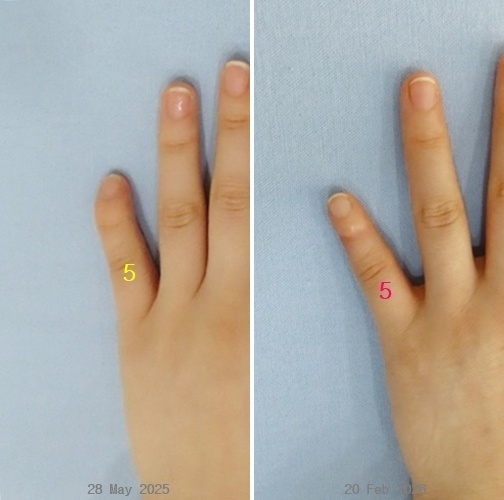
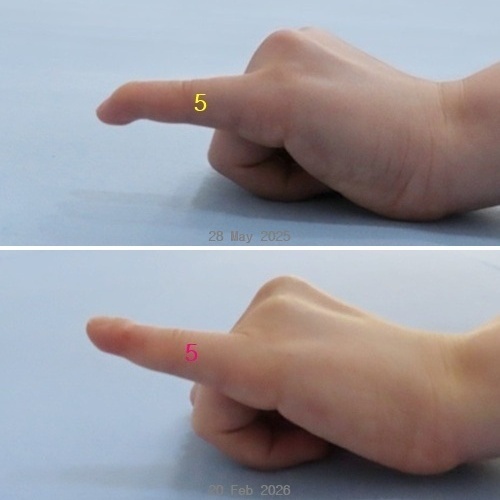
17. Recovery After Finger Correction Surgery
Recovery varies according to the surgical technique, fixation method, and severity of the deformity.
Depending on the procedure:
✔ A full cast may not be required in selected cases
✔ Unaffected fingers may often be used early
✔ Movement of the operated finger is started according to the surgeon's instructions
✔ Wound care is required during early healing
✔ Follow-up X-rays may be necessary
✔ Hand therapy may be recommended
✔ Activity is gradually increased as healing progresses
Early movement is not appropriate for every procedure, so postoperative instructions should be individualized.
18. Rehabilitation
Rehabilitation may be important after finger correction surgery.
Depending on the procedure, rehabilitation may focus on:
✔ Maintaining joint motion
✔ Reducing stiffness
✔ Controlling swelling
✔ Improving tendon movement
✔ Restoring hand function
✔ Protecting the corrected bone while it heals
The timing of exercises depends on the stability of the correction and the surgical technique.
19. Possible Risks & Complications
As with any orthopedic surgery, complications are possible.
Potential risks include:
✔ Infection
✔ Delayed wound healing
✔ Joint stiffness
✔ Reduced range of motion
✔ Nerve irritation or numbness
✔ Delayed union
✔ Nonunion
✔ Fracture
✔ Implant irritation or failure
✔ Residual angulation
✔ Loss of correction
✔ Recurrent deformity
✔ Tendon problems
✔ Need for additional surgery
Potential benefits, limitations, and risks should be discussed before surgery.
20. Frequently Asked Questions
Q. Can clinodactyly be corrected?
Surgical correction may be considered for selected patients with significant clinodactyly. The appropriate treatment depends on the degree of curvature, bone anatomy, symptoms, age, and functional impact.
Q. Can camptodactyly be corrected?
Treatment depends on the cause and severity of the flexion deformity. Mild or flexible cases may be managed conservatively, while selected fixed or significant deformities may require surgery.
Q. Can an adult have a crooked finger corrected?
Age alone does not determine whether correction is possible. The condition of the bone, joint, tendons, soft tissues, range of motion, and expected benefit should be evaluated individually.
Q. Can a finger that has been crooked for decades be treated?
Some long-standing deformities can be surgically corrected. However, the degree of correction possible depends on the existing joint, bone, tendon, and soft-tissue condition.
Q. Is general anesthesia required?
Selected procedures may be performed under regional/local anesthesia with sedation. The appropriate anesthesia depends on the operation and the patient's medical condition.
Q. How long does surgery take?
Some relatively straightforward correction procedures may take approximately 20 minutes, while complex deformities can require longer surgery.
Q. Can I use my hand after surgery?
Unaffected fingers can often be used relatively early. Use of the operated finger depends on the procedure, fixation, and healing status.
Q. Is a cast required?
A full cast may not be necessary for selected procedures, but splinting or other protection may still be required depending on the operation.
Q. Will there be a scar?
Any surgical incision can leave a scar. When appropriate, a small-incision approach may be used to minimize the incision, but an invisible scar cannot be guaranteed.
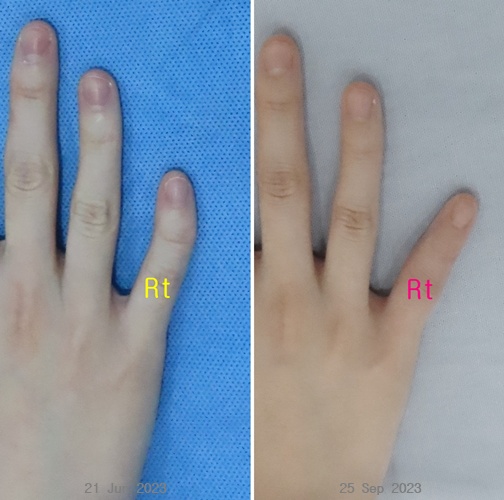
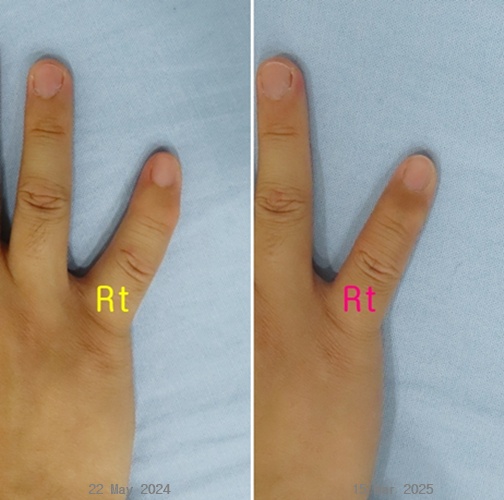
21. Clinodactyly & Camptodactyly Surgery in Seoul, South Korea
Gangnam Champion Hospital provides evaluation and treatment for various finger deformities, including:
✔ Clinodactyly
✔ Camptodactyly
✔ Curved pinky finger
✔ Bent little finger
✔ Crooked finger
✔ Congenital finger deformity
✔ Post-traumatic finger deformity
✔ Finger fracture malunion
✔ Long-standing finger deformity
✔ Revision finger surgery
✔ Selected toe deformities
Treatment is individually planned according to the patient's anatomy, X-rays, range of motion, functional limitations, and treatment goals.
International Patient Consultation
International patients may contact us before traveling to Korea for an initial review.
For preliminary evaluation, it may be helpful to provide:
✔ Clear photographs of both hands
✔ Photograph with the fingers fully extended
✔ Photograph while making a fist
✔ Recent X-rays, if available
✔ Age
✔ Duration of the deformity
✔ Previous injury or surgery history
✔ Current symptoms
Final diagnosis and treatment planning require appropriate medical examination.
Gangnam Champion Hospital
525 Ogeum-ro, Songpa-gu
Seoul, South Korea
T : +82-2-408-7575
E : drahn818@naver.com
◆: [ Consultation ]
Patients from overseas may contact the hospital for information regarding consultation, treatment scheduling, expected stay in Korea, and follow-up care.
This page provides general medical information and does not replace an individual medical consultation. Surgical indications, techniques, recovery, risks, and outcomes vary according to each patient's condition.
-축소 150.jpg)